
October 09, 2026



A command centre does not need a spare room, fitted cabinetry or a weekend of drilling. In most small UK homes it needs about a metre of wall, a couple of hooks and somewhere to put the post before it turns into a pile. Get it right and the morning hunt for car keys, the missing permission slip and the forgotten PE kit stop being a daily drama. Get it wrong and you have simply moved the clutter from the worktop to the wall.
The best location is not the prettiest one, it is the one nobody can avoid. For most families that means the hallway by the front door, the strip of wall beside the fridge, the end of the kitchen run, or the bottom of the stairs. If your porch or utility has a spare bit of wall, that works too, as long as it is indoors and dry.
Stand in your chosen spot and check three things. Can you reach the middle of it without stretching or moving anything? Is there enough light to read a letter? Could you stop there for thirty seconds with a bag in one hand? If the answer to any of those is no, you will stop using it within a fortnight.
Aim for 60cm to 100cm of width. More than that and the space fills with things that should live somewhere else. If you rent, adhesive strips, over-door hooks and a slim freestanding shelf by the door all do the job without leaving holes behind.
A command centre is a decision point, not a storage unit. Everything on it should be there because you will look at it in the next seven days. Anything else belongs in a drawer, a folder or the recycling.
What does not belong: last term's newsletters, receipts, takeaway leaflets, chargers, unopened post from three weeks ago and anything already dealt with. If a piece of paper has been actioned, it leaves the board the same day.
Small spaces work best when you use height rather than spreading sideways. In a narrow hallway you have maybe 15cm of depth to play with, so anything that juts out will be knocked or ignored.
A strip of magnetic board on the side of the fridge or boiler takes up no floor space at all. So does a shallow pinboard fixed inside a cupboard door, or an over-door organiser with clear pockets. An inexpensive picture rail or a length of narrow timber with screw-in hooks can hold keys, lanyards and a small clip for the dog lead. If the wall is the only surface you have, mount everything on one vertical line so it reads as a single tidy column rather than scattered clutter.
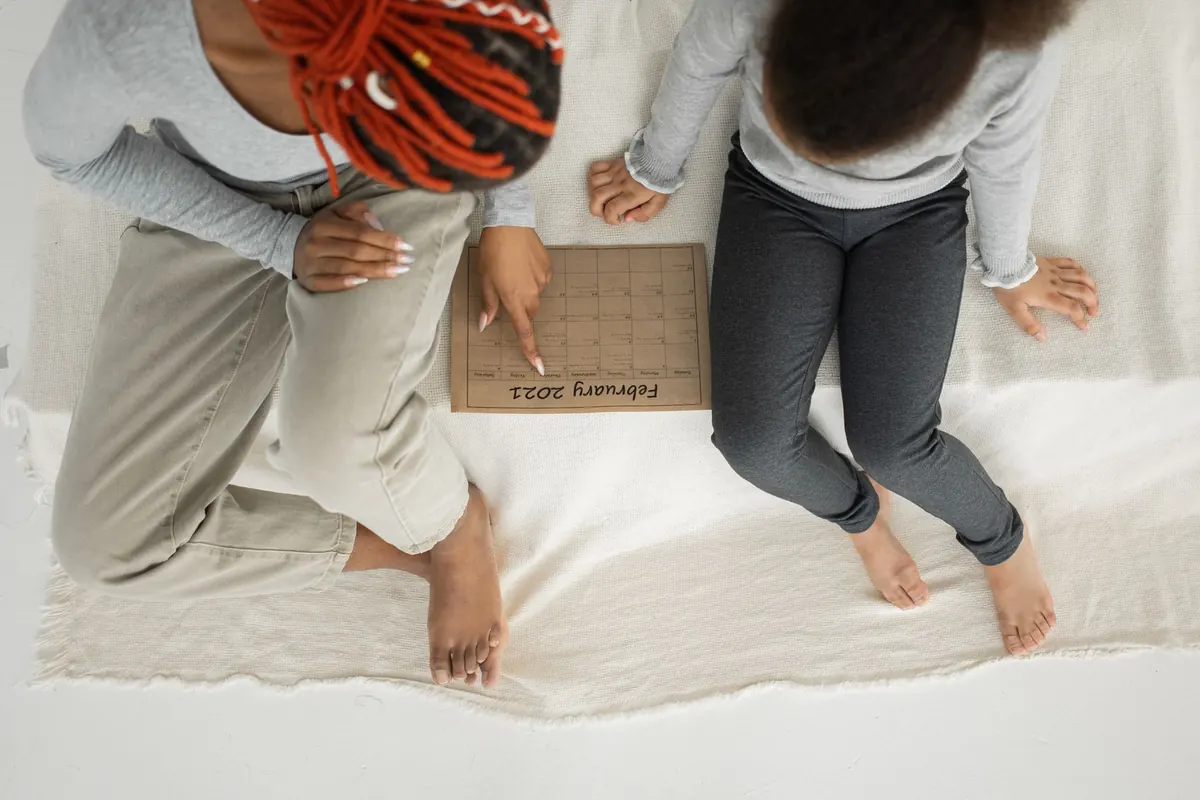
A month-to-view paper calendar still beats most apps for a family, because everyone can see it while eating breakfast. Give each person a colour, or a column if you have the space, and write in the fixed things first: term dates, clubs, swimming, bin day, birthdays, regular appointments.
If you prefer digital, keep a shared family calendar on your phone for the details and a small whiteboard for the current week. The whiteboard holds what is actually happening in the next seven days; the phone holds everything else. Either way, one rule saves a lot of arguments: if it is not written down, it does not happen. So write it down the moment the letter arrives, not on Sunday evening when you have forgotten what it said.
Letters come home in bags, in coat pockets and by email, and they arrive faster than anyone can file them. Deal with each one at the board rather than on the kitchen table, and make only two decisions.
Keep a folder or a labelled wallet for the paperwork you genuinely have to keep, such as medical letters or club consent forms, and empty it at the end of each term. If you are dealing with anything official, financial or medical, keep the original documents somewhere secure and seek proper advice rather than relying on a note on a board.
Command centres fail because nobody empties them. Pick a time that already happens, such as Sunday evening after dinner, and set a timer.
Then leave it alone. The point is not to create a beautiful wall, it is to give your household one place where decisions get made: what is happening, what needs signing, where the keys are. Ten minutes a week keeps that working. If the board starts to bulge, you are storing rather than deciding, and it is time to clear a layer and start again.
Photo: Monstera Production / Pexels
Organize your home with simple notes and reminders..
Copyright © 2026 Memo House. All rights reserved. Memo House.